Need ac repair in Warren?
Questions about a heating or cooling problem? Send a request through the form or email contact@pickingdrama.beer. A local provider in our network can follow up with next steps.
No obligationRequest an estimate when you are ready
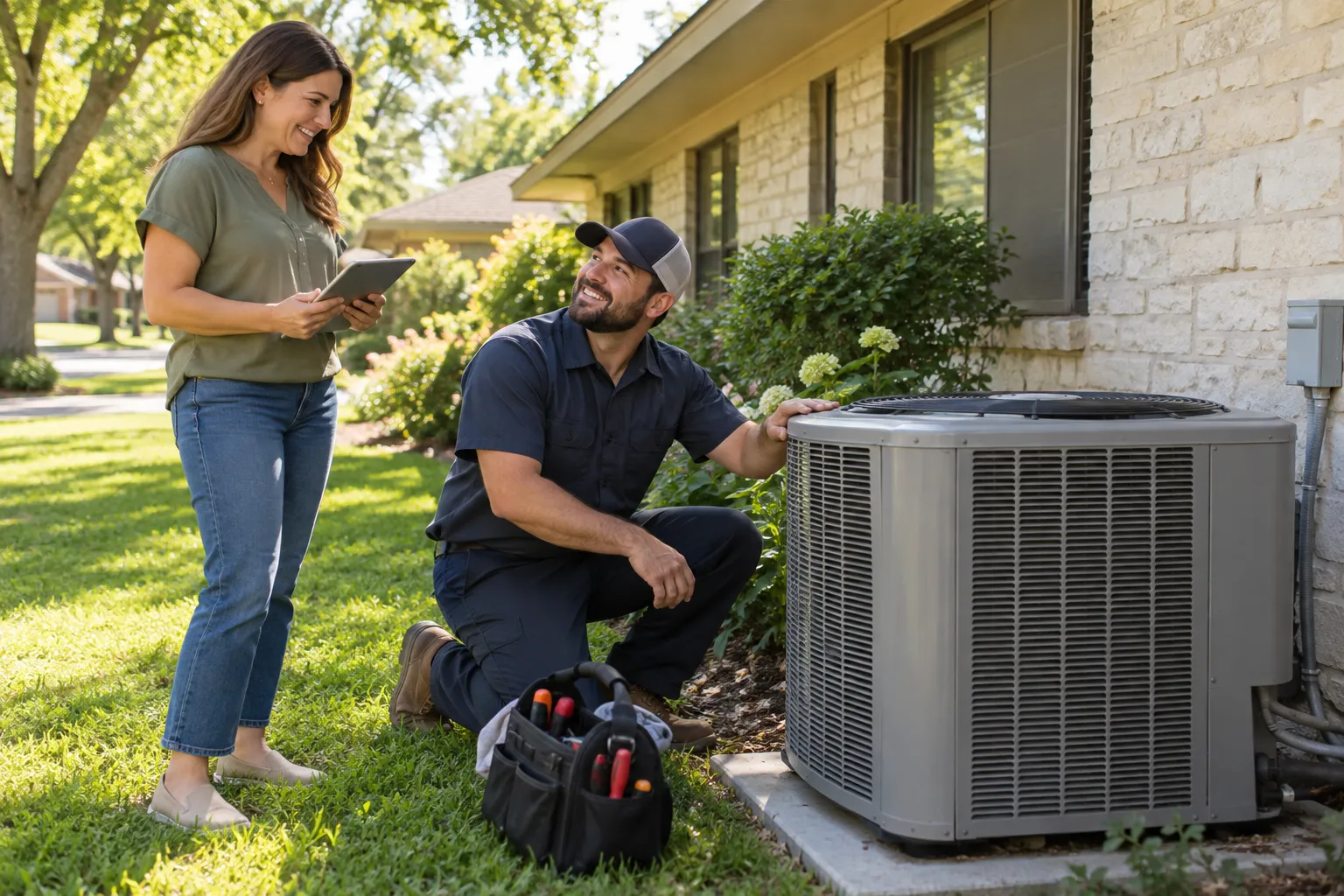
A broken AC is stressful, especially when the house is full of people and the schedule is already tight. Take a breath. Most cooling problems have a clear cause, and a local provider can usually find it during one visit.
Pickingdrama Heating & Air is a referral service. We do not repair air conditioners ourselves. We connect homeowners in the Warren area with independent providers in our network who handle emergency AC repair and routine HVAC service. This page explains the signs, the steps and the questions to ask, in plain words, so a first repair feels less confusing. You can plan around school runs, shifts and bedtimes, and you are never obligated to hire anyone.
A warm house on a sticky night is hard on everyone. Take a breath. Most air conditioner problems are fixable, and many are small. A local provider can work out what went wrong and explain it in plain words.
If the house is heating up fast, you may need emergency AC repair. If it is only a little weak, you have more time to plan. This page goes from the most urgent steps to the calmer ones.
These take a few minutes. Sometimes they solve it.
If none of that helps, do not keep poking at it. Move on to the next step.
Turn the system off at the thermostat if you see ice on the pipes, smell something burning, or hear loud grinding or buzzing. Running a struggling system can turn a small repair into a big one.
After a hard thunderstorm, hail or spring flooding, stay away from the outdoor unit if water or damage is nearby. If your air handler sits in a basement close to the sump pump, check that area from a dry spot only.
Request a callback to check provider availability. Many providers can respond quickly, though hours vary.
The vents blow, but the air is not cool. Or one room stays warm while others are fine. This often points to airflow trouble, low refrigerant or a part that is wearing out.
Clicking that will not stop, squealing, rattling or a musty smell are all worth a look. Sounds usually tell a provider where to start.
Puddles near the indoor unit, frost on the lines, or a house that feels clammy even when it is cool can mean a clogged drain or a coil problem. In a humid summer, this shows up quickly.
If the system runs all day and your bill climbs, something is making it work too hard. A tune-up or repair can often catch it.
Plan around your week. A repair does not have to take over your life.
Tell the provider about school pickups, shifts, naps and work calls. Ask for a window when someone can be home, and ask if they can phone before they arrive.
Move toys, boxes and laundry away from the indoor unit and the thermostat. In older frame houses and bungalows, the unit may sit in a tight closet or a basement corner, so a clear path saves time.
Close blinds, run fans, drink water and keep little ones and pets in the coolest room. If heat is a health worry for someone in your home, tell the provider right away.
If this is your first time, here is what to expect.
The provider looks at the thermostat, filter, outdoor unit, indoor coil, drain and electrical parts. They may measure airflow and pressure.
You should hear what failed, why, and what the choices are. Plain words first. Ask them to point at the part if it helps.
Before work begins, ask for the price in writing, including parts and labor. You can say yes, ask questions or get a second opinion.
Once you agree, the provider fixes the part, runs the system and confirms it cools. Ask what to watch for in the next few days.
These small electrical parts help the fan and compressor start. When they fail, the unit may hum but not run. They are among the more common fixes.
An AC does not use up refrigerant. If it is low, there is a leak. A good repair finds the leak instead of just topping it off.
A weak blower or a stuck outdoor fan can stop heat from leaving your home. Motors cost more than small parts, so the quote matters.
A blocked drain can cause water damage or shut the system off. Humid summers make this more likely, and cleaning is often straightforward.
Repair is usually the calm choice when the system is not very old and the problem is a single part. Replacement may be worth discussing when the unit is many years old, breaks down again and again, or has a major failure like a compressor.
Ask the provider to compare both options in writing. Replacement has its own page on this site, so use this page for repair questions first.
Some policies may cover sudden damage, so check your policy. Providers can often help document damage for a claim.
You do not have to figure this out alone. Request an estimate, compare what you hear, and choose what fits your home and your week. There is no obligation.
A provider checks the thermostat, filter, coil, drain and electrical parts to find why the air is not cool.
You hear what failed and what your options are in plain words.
Ask for parts and labor in writing before any repair work begins.
Share your family schedule so the visit window can fit around school, work and bedtimes.
Prices vary by home, part and provider. These are typical U.S. ranges only, not quotes. Ask for a written quote with parts and labor listed before you agree to any AC repair work.
| Repair item | Typical range | Notes |
|---|---|---|
| Diagnostic visit | $75 – $200 | Often applied toward the repair |
| Capacitor or contactor | $150 – $450 | Common small electrical fix |
| Drain line cleaning | $100 – $300 | Prevents water backup |
| Refrigerant leak repair | $250 – $1,600 | Depends on leak location |
| Fan or blower motor | $300 – $1,000 | Varies by motor type |
| Compressor replacement | $1,200 – $3,500 | May lead to a replace talk |
Describe the problem, such as warm air, strange noises or a dead unit, so the right provider can be matched.
Let the provider know when someone can be home so the visit fits your week.
Ask for a written price with parts and labor, and compare if you wish.
Say yes only when you feel ready, then the provider does the work.
Providers in our network are asked to explain problems simply, so you can make a calm decision without technical jargon.
Tell providers about your work, school and bedtime routines so visits can be planned around them.
No question is too basic. Ask what each part does and why it matters.
Request an estimate, compare, and decide at your own pace. You choose the provider.
Questions about a heating or cooling problem? Send a request through the form or email contact@pickingdrama.beer. A local provider in our network can follow up with next steps.
No obligationCommon causes include a dirty filter, a frozen coil, low refrigerant or a failed electrical part. Switch the system off if you see ice, then ask a local provider to diagnose it.
Many repairs land between about $150 and $1,600 in the U.S., depending on the part and the home. Ask for a written quote before you approve any work.
Repair often makes sense for a younger unit with one failed part. If it is old or keeps breaking, ask the provider to compare repair and replacement costs in writing.
Questions about a heating or cooling problem? Send a request through the form or email contact@pickingdrama.beer. A local provider in our network can follow up with next steps.
No obligation